


Bayliner 3255 Avanti Express Cruiser – Unusual Bow ThrusterSeptember 6, 2014
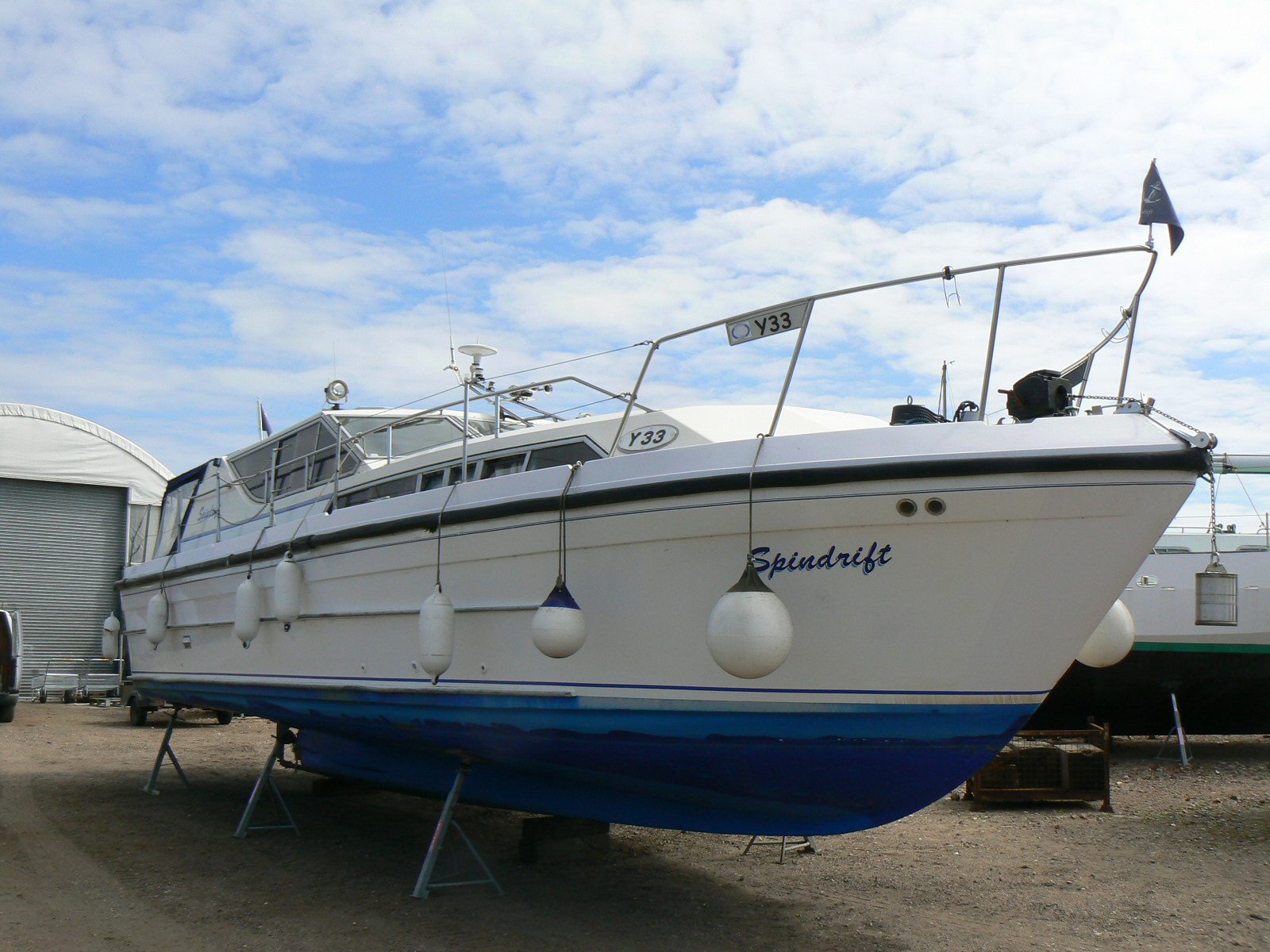
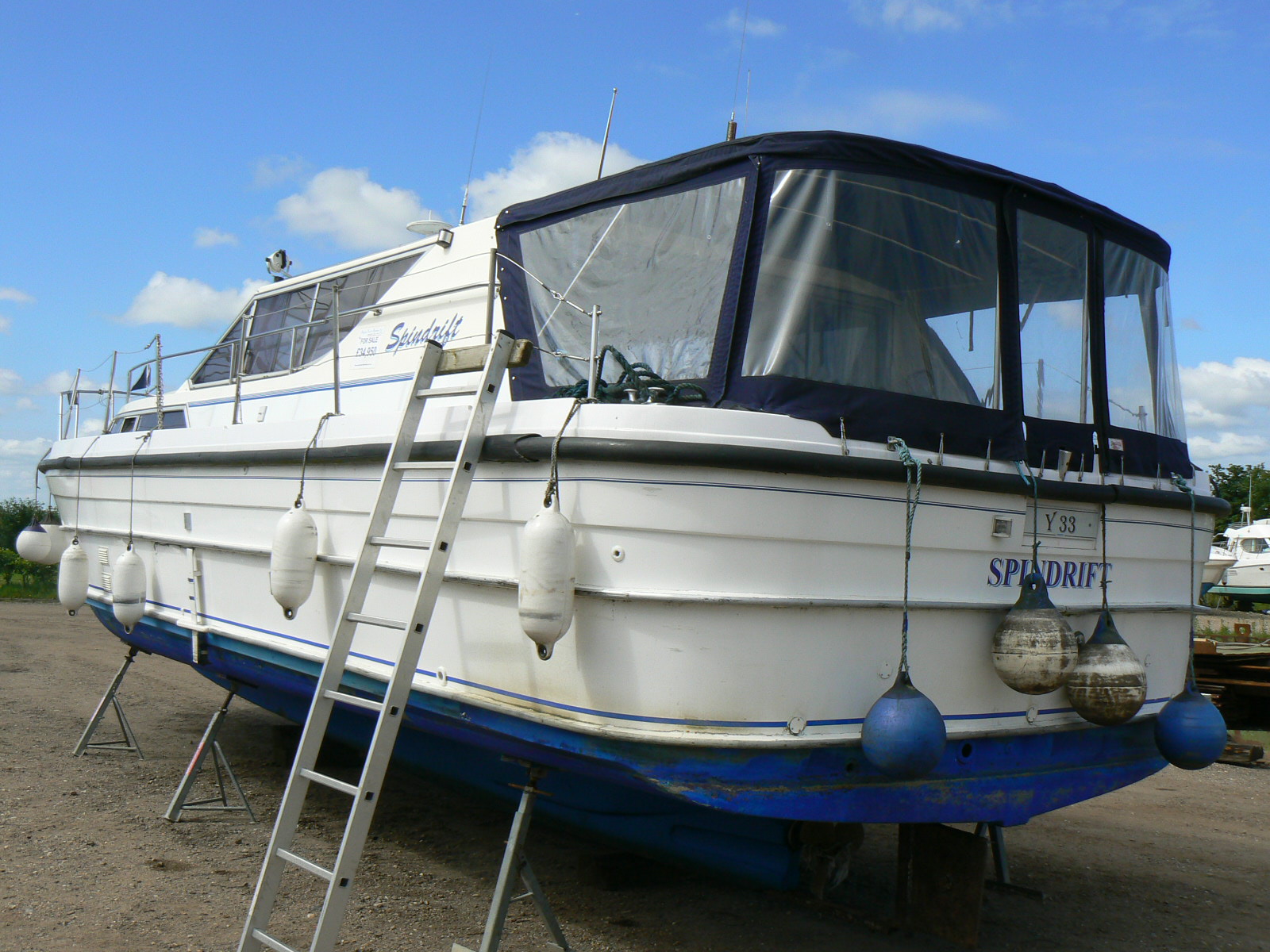
Bayliner 3255 – With an unusual bow thruster
During last week surveys, I came across an interesting bow thruster on a Bayliner 3255. As opposed to being built within a tunnel in the bow, the motor and props were externally mounted on the stem
I understand that these units are quite common in the USA being purchased off the shelf and can be DIY installed
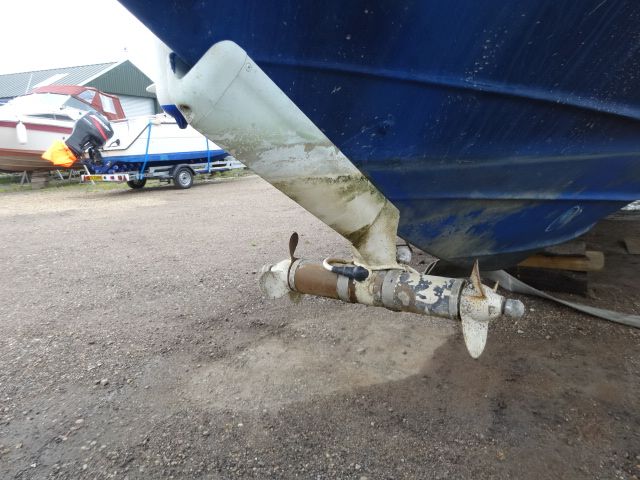 Not a recommended installation
So, as you can see from the above picture, all of the bow thruster is exposed. And this is probably fine when sailing on the Broads (good for catching ropes etc) at a low speed but if one wants to enjoy a trip out at sea, two things are going to happen
1. The bow thruster will almost certainly be out of the water when the boat is planing
2. The chances of this unit suffering accidental impact damage are very high indeed
Since the vessel has twin outdrive propulsion and is reasonably small in length, It is better for the owner to practice control with the two engines and possibly consider removing the external bow thruster or investigating a way to have a bow thruster tunnel fitted.
Despite this slight concern, this boat was a good example of a Bayliner 3255. The interior was in a good condition with the usual fair wear and tear consistent with a vessel of this vintage, no osmosis was found and the boat was strongly built.
The usual questions were raised regarding the condition of the legs and since when buying a boat you are also buying one or two engines with it, we always recommend having a qualified marine engineer carry out an in-depth inspection of the out-drive units as they can be notoriously expensive to be put right.
Plus have an engine Oil Inspection Analysis which we offer as a service
For more information contact European Marine Services Ltd (inc European Marine Surveys) Tel : 01603 327 123 www.europeanmarinesurveys.com
LPG Safety Warning – Beko, Leisure & Flavel Gas CookersAugust 12, 2014
Boat Safety Scheme
A Marine Survey Service from – European Marine Services Ltd
IMPORTANT SAFETY WARNING – BEKO, LEISURE & FLAVEL GAS COOKERS MANUFACTURED – PRIOR TO JAN 2009
If your cooker has been converted to run on LPG (bottled gas), please click here.
These appliances are designed for cooking purposes only and must NOT be used as a space heater, or for any other purpose. CHECK THE LIST BELOW TO SEE IF YOU OWN ONE OF THE AFFECTED COOKERS. Click on the model number to download an instruction booklet if required
WHAT YOU NEED TO DO IF YOU OWN ONE OF THESE COOKERS
1. FOLLOW THE PRODUCT INSTRUCTION MANUAL AND DO NOT OPERATE THE GRILL WITH THE GRILL DOOR CLOSED
When the grill burner is on, the grill door must always be in the open position. If the grill is operated with the grill door closed, the air supply to the grill burner is restricted which can cause extremely dangerous levels of carbon monoxide to be produced which can pose a very serious risk to health.
2. ARRANGE FOR A FREE SAFETY INSPECTION AND MODIFICATION
If you own or use any of the models shown above, please call Beko on:
- UK Free phone 0800 917 2018
0800 917 2018
- Ireland Free phone 1800 25 29 25
Beko customer care centre is open from 8am to 8pm, Monday to Friday, and 10am to 4pm Saturday and Sunday. We will then arrange to carry out a free modification to your product to remove any risk When calling please have your full model number and serial number to hand – these can be found on the rating plate at the bottom front edge of the appliance (see below).
| Beko | Leisure | Flavel |
|---|---|---|
| DCG8511WLPG | CM10NRK | DCGAP5LS |
| DCG8511PLW | CM10NRC | AP5LDWP |
| DG581LWP | AL6NDW | AP5LDW |
| CM101NRCP | AP5LDSP | |
| CM101NRKP | Flavel Milano ML5NDS |
Leeward 18 – Visual Inspection / ReviewJuly 5, 2014
Leeward 18
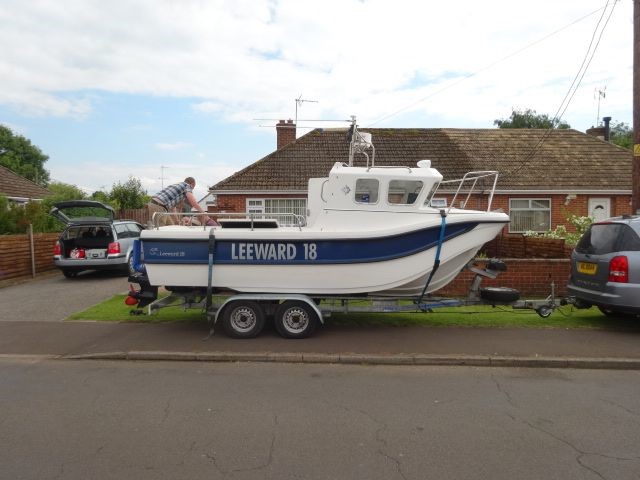
I was recently asked to look at a Leeward 18 for a visual and verbal report upon its condition.
I have to say that this was one of those enjoyable marine surveys where even from a distance I could see that the boat was in really good condition.
The previous owner had kept a good schedule of maintenance for the vessel and her engine. She has a Mercuiser sterndrive diesel engine and was visually well kept.
Those boats have been built for fishing purposes as well as leisure use. The GRP hull is strongly built to a high standard. She features a large aft cockpit with plenty of space for the fishing gears and also has a neat little cabin to be sheltered from the sprays when reaching the fishing spot.
The hull design allows the boat to plane and reach any destination in no time at all. But also can be very easily trailed by road to get to further afield places.
Looking forward to more of these
Marine Anodes for Boats – A Clear & Simple Resume
ALL ABOUT ANODES FOR LEISURE BOATS
” Plus Bonding Systems “
How do sacrificial anodes help keep your boat in good condition and possibly afloat
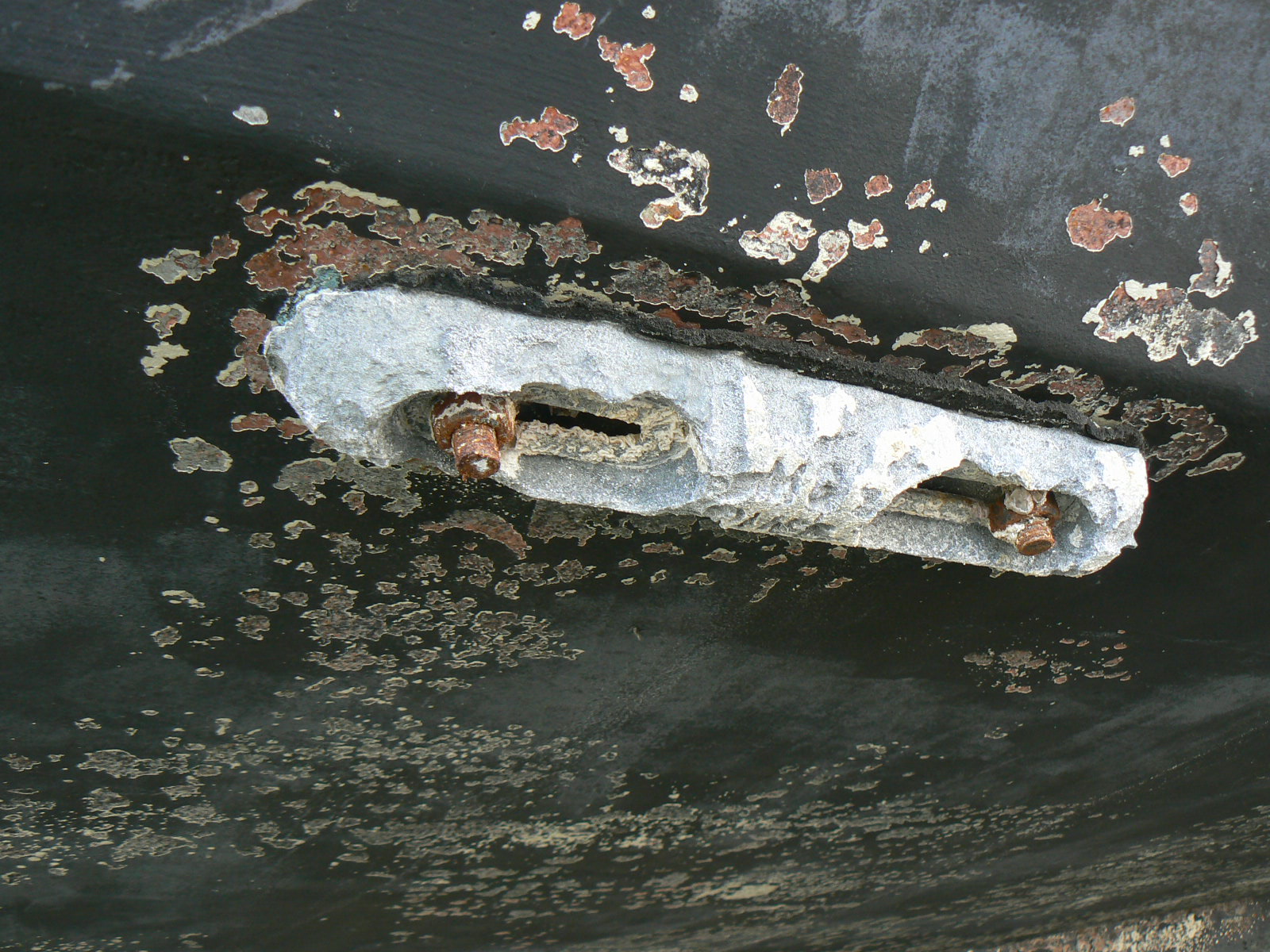
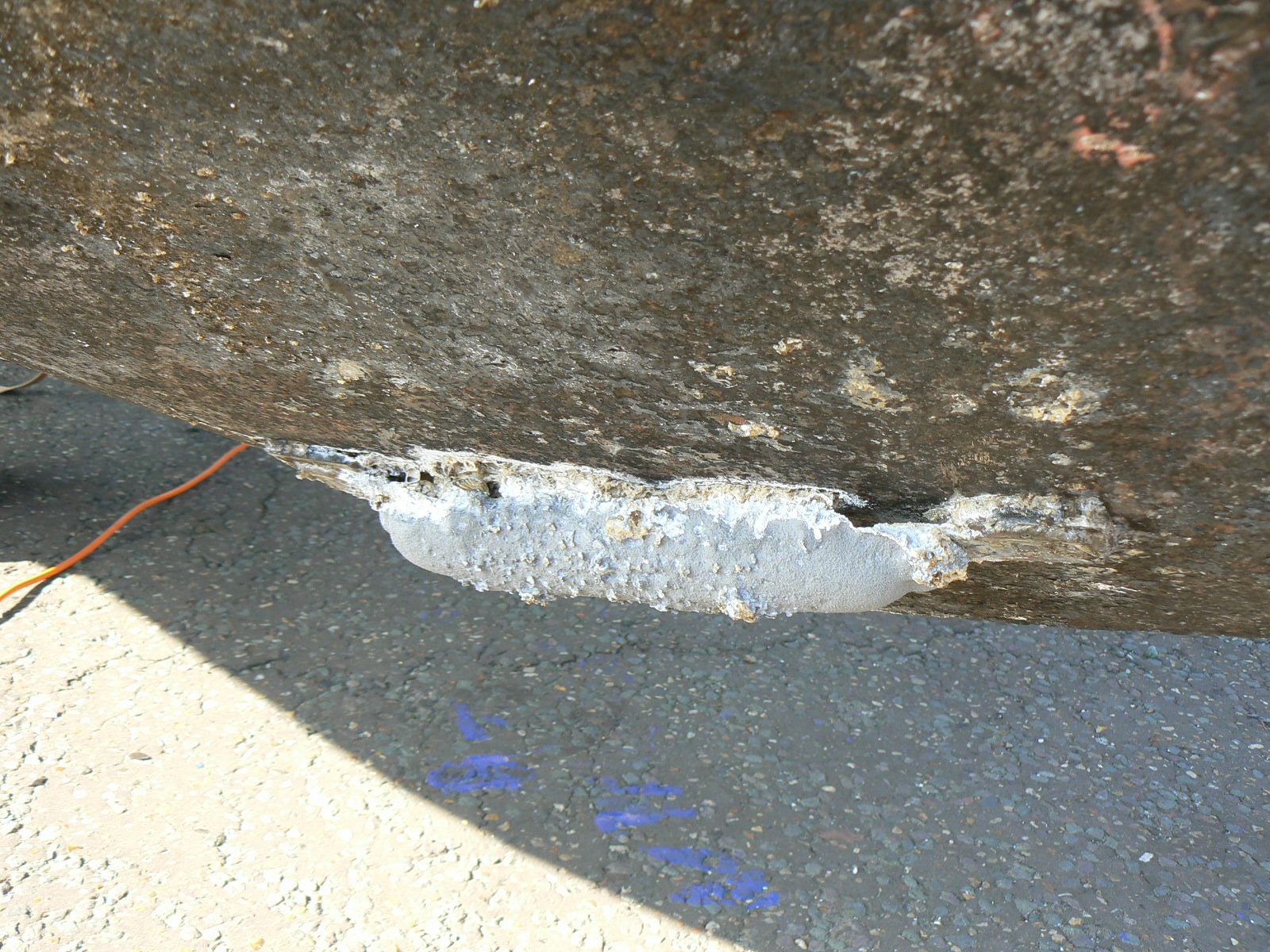
Pictures – Hull anodes that ” No longer have sufficient mass to be effective “
In a few words, how galvanic corrosion works.
Any two dissimilar metals submerged together in an electrolyte – sea water in our case – will create an electrical current known as a galvanic cell (like a battery), with the less noble (more active) metal, a bronze propeller for instance, forming the anode and the more noble (less active) metal, a stainless steel shaft, forming the cathode. The electrical current will travel from the less noble metal, anode, to the most noble metal, cathode, depleting the anode from its core material in the process.
The bronze propeller will gradually corrode away and this is where trouble will start.
The way around it is by adding a sacrificial anode to the system.
This anode will need to be made of a more active metal than the other two and thus the bronze propeller will now become a cathode and be protected.
That’s all fine when looking at a simple assembly such as a prop and prop shaft. Stick an anode on the shaft and that is generally sufficient but how about a bronze seacock and through-hull fitting? Not very practical to stick an anode on each one of them. So the answer is to electrically bond them to the anode.
All immersed metal components should be connected to the cathodic protection. Many ingenious systems exist to bond the engine, prop shaft and propeller and you should see with your engineer what would be best suited for your boat.
Anodes on non ferrous boat are generally bolted through the hull. Easier than welding onto a GRP hull or a wooden one!
But that’s great because now we’ve got two studs inside the boat connected to the outside anode. So now we can wire (bond) the seacocks to the anode’s studs, and the engine and prop shaft to another, or the same one depending on the size of the boat, and the amount of dissimilar metal within close range of each other. One thing to remember is that anodes can “see” the parts to be protected so long as the circuit is not broken.
A few things to look at when connecting them is that the connection is well made and kept on the inside of the hull and clear of bilge water.
Also, when you pop your head down the bilge, have a quick look at the connection as the bond might be broken due to galvanic corrosion and now what you were thought was protected by the anodic circuit is now isolated and will corrode.
Different Waters = Different Anodes
Three different types of anodes can be used:
- Fresh water Magnesium
- Salt water Zinc
- Brackish water Aluminium
The surface of a zinc anode when left in fresh water for some time become covered with an off-white crust. This will effectively seal the anode and stop it working when it is returned to the salt water. The consequences are that the next most anodic item bonded to the anode will start to sacrifice itself. It is therefore important to check the anodes after trips into fresh water. Also, if keeping the boat on the Norfolk Broads or brackish waters, aluminium anode would be a preferred choice to protect the vessel.
It is important to have them replaced when they reach ~50% of their original mass as the rate of galvanic corrosion is accelerating and your protection diminishing.
For Information: Very rapid zinc anode loss that results in bright, shiny metal being exposed is a clear indication of electrical activity, be it galvanic or stray current, usually the later, since galvanism rarely creates enough current to destroy zincs quickly .
Bright zinc in association with heavily corroded bottom paint means you have a problem that needs to be addressed immediately. The brightness of the zinc is telling you that there is too much current for the zincs to handle. Adding more zinc is NOT the solution
Earthing – Bonding Systems:
The purpose of a bonding system is to equalize the electric potential of dissimilar underwater metals by tying them all together with wire or copper straps. The benefits of a bonding system are wide ranging but little perceived. One is that it serves to dissipate stray current leaks. 12 volts of current focused on a small piece of metal will result in rapid destruction.
But that same 12 volts spread over a much larger surfaces, causes less damage in proportion to the size of the water exposed surfaces of the metal. Bonding systems can reduce the corrosion potential of metals inside and on the bottom of the boat.
Vessels which have all the hardware bonded, such as the railings, will suffer much less corrosion. The general rule is that anytime a piece of metal plumbing or hardware is isolated in a system, as with a sea strainer that is joined by two hoses is electrically isolated, needs to be wired into the system.
This can be done by daisy chaining items together, but it’s a good idea not to include too many items in a chain. Obviously, at any point where a connection is broken, all those items upstream will be unprotected.
DC Current leaks are the most common form of a stray current problem
Yes I know, We’ve just added another box to your winter maintenance tick list But hey, they need to be looked after.
Stern Drives, Outboards & Sail Drives
Now for those of you with a sterndrive, outboard or saildrive, things are bit more sensitive. See an earlier post SeaRay 290 Sinking – Mercruiser Stern Drive Investigation
As they are made in aluminium for lightness reasons, although of a high quality they are very prone to galvanic corrosion. It is very important to keep all the anodes in good condition i.e the anodes are depleting and not the stern drive casing. I often found that the little braided wire connecting the casing to the anodes was broken so make sure to keep the connection live!
Although the standard propeller is generally made of aluminium on those units it might have been replaced by a stainless steel prop for better performance, thus changing the situation. You will need to review your cathodic protection and install an extra and bigger anode.
Another silly one is when the ‘sport’ boat is moored, the sterndrive is often kept out of the water, which in some ways is a good practice. But on some boats the leg cannot be fully titled out of the water, leaving the gearbox partially immersed while the anodes are nicely dry in the sunshine enjoying their holiday and not doing much to protect the gearbox. It will lead to a rapid deterioration of the gearbox casing and resulting in water ingress.
To overcome that issue you can either fit an extra anode on the transom or hang some over the side of the boat (in the water) close to the leg.
Someone once told me that you can only have over protected your boat when it sinks from the weight of the anodes!
But most of all remember that a painted anode doesn’t work at all You can see the evidence by the end of the season when the anode is still painted and your prop is almost gone!
Now here is a simplified galvanic series. Platinum is pretty much up there on top of the noble metals but I thought I would stick to materials actually used in boat building just to keep it relevant to us.
Steel Hulls / Cathodic Protection
Currently most UK canal boats do not have enough anodes fitted to provide protection to all of the hull. Often we see vessels of considerable length (60ft plus) with only 4 hull anodes fitted. Typically 2 at the bow and 2 at the stern. Our literature has perhaps not helped as we do show vessels up to a wetted surface area of 56m2 with 4 anodes for protection and vessels up to 70m2 with 6 anodes. I would suggest that all vessels should as a minimum have 6 anodes, and as the vessels get longer in length they should have 8. I will be looking at updating our own literature to reflect this.
From a technical point of view an anode will only “throw” its protective current roughly 7 times its own length, which is why anodes are required to be equally spaced along the hull of the vessel to ensure good coverage. From this you can see that just fitting 4 anodes to a typical canal boat is not adequate protection for the entire hull. I suspect that most pitting corrosion you see is at the mid ships position, as this is the furthest point from the bow and stern mounted anodes.
The flip side to the argument for better cathodic protection is possibly that most canal boats operate in fresh water and this is a far less aggressive medium to salt water. Plus that anodes are used to provide a back up to a good protective paint system. However I still feel a belt and braces option is always best and especially verses the cost of hull plating.
Galvanic Series:
In this sample list, the metals and alloys are arranged in order of their potentials, measured with reference to an electrode immersed in salt water.
The list is arranged 00 – 12 with the least noble metals # 12 (ANODIC) at the top end and the most noble # 00 (CATHODIC) at the bottom.
ANODIC MOST ACTIVE
12: MAGNESIUM ALLOYS
11: ZINC
10: GALVANISED MILD STEEL
09: ALUMINIUM ALLOYS
08: MILD STEEL
07: LEAD
06: GUNMETAL
05: MANGANESE BRONZE
04: NAVAL BRASS
03: SILICON BRONZE
02: COPPER
01: MONEL
00: STAINLESS STEEL
CATHODIC – NOBLE PASSIVE / LEAST ACTIVE
For more information contact European Marine Services Ltd. Marine Surveyors & Consultants
EMS also undertake Boat Safety Inspections & Engine Inspections
www.europeanmarinesurveys.com
Tel: 01603 327 123
Westwood 38 | Osmosis & Gel Coat Delamination | # 00790June 27, 2014
EMS recently carried out a Pre Purchase Survey on a Westwood 38 and the most interesting ‘hull structural conditions’ were found – as follows …..
Firstly
” It is generally accepted that osmotic blisters will not be found with ‘low’ moisture meter readings. Not all blisters are caused by osmosis, some will be found to be dry blisters, these may often appear in the gel coat and usually caused by aeration when the original batch of gel coat was mixed ”
However the hull below the waterline had quite extensive blistering average about 20 – 30mm, with some odd blisters up to 60mm – the blisters being under internal pressure from blister juice
” A blister was burst giving off chemical-smelling (blister juice) liquid, being acid and breaks down the polyester in a process known as hydrolysis – being normally localized. The moulding as a whole will still retain most of its strength unless these current blisters become very much larger and much more extensive “
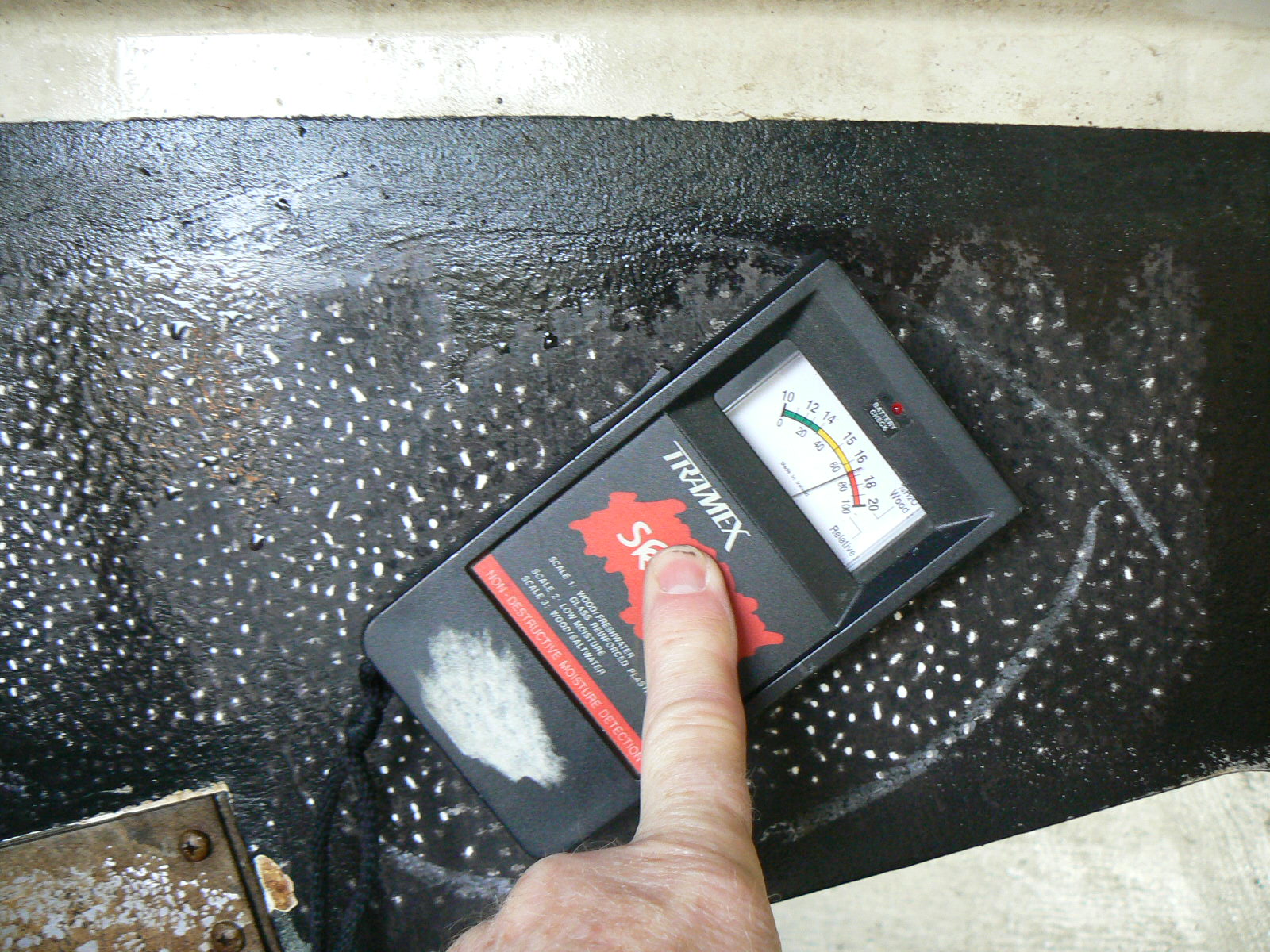
However, we discovered that the hull when measured with a Tramex Moisture Meter gave generally low readings of around 16% or for GRP ~1.6%. From experience such low readings with this degree of osmosis are very very unusual – and indeed ‘acceptable’ in a boat of this vintage
Secondly
There were several small areas the size of a small plate (but not round) below the waterline where the gel coat laminate had actually ‘delaminated’ cleanly from the hull. Exposing the underlying substrate.
These small areas did not appear to have been the consequence of a large blister or combination of blisters
It appeared that (though we find this difficult to explain) the gel coat had never actually bonded with the substrate.
Despite the substrate being exposed constantly to water without the added protection of the gel coat, moisture meter readings taken on these exposed substrate areas also gave low readings
We are at a loss to explain the above and having carried out over 1,000 hull osmotic inspections over the past few years we have never (yet) come across such a combination / condition – There is always something new to learn !
Our advice to the client is to clean and dry the exposed areas of substrate and apply an epoxy coating
If anyone has come across such a combination of low meter readings plus extensive osmosis plus gel coat delamination, we would pleased to hear about it and welcome feed back
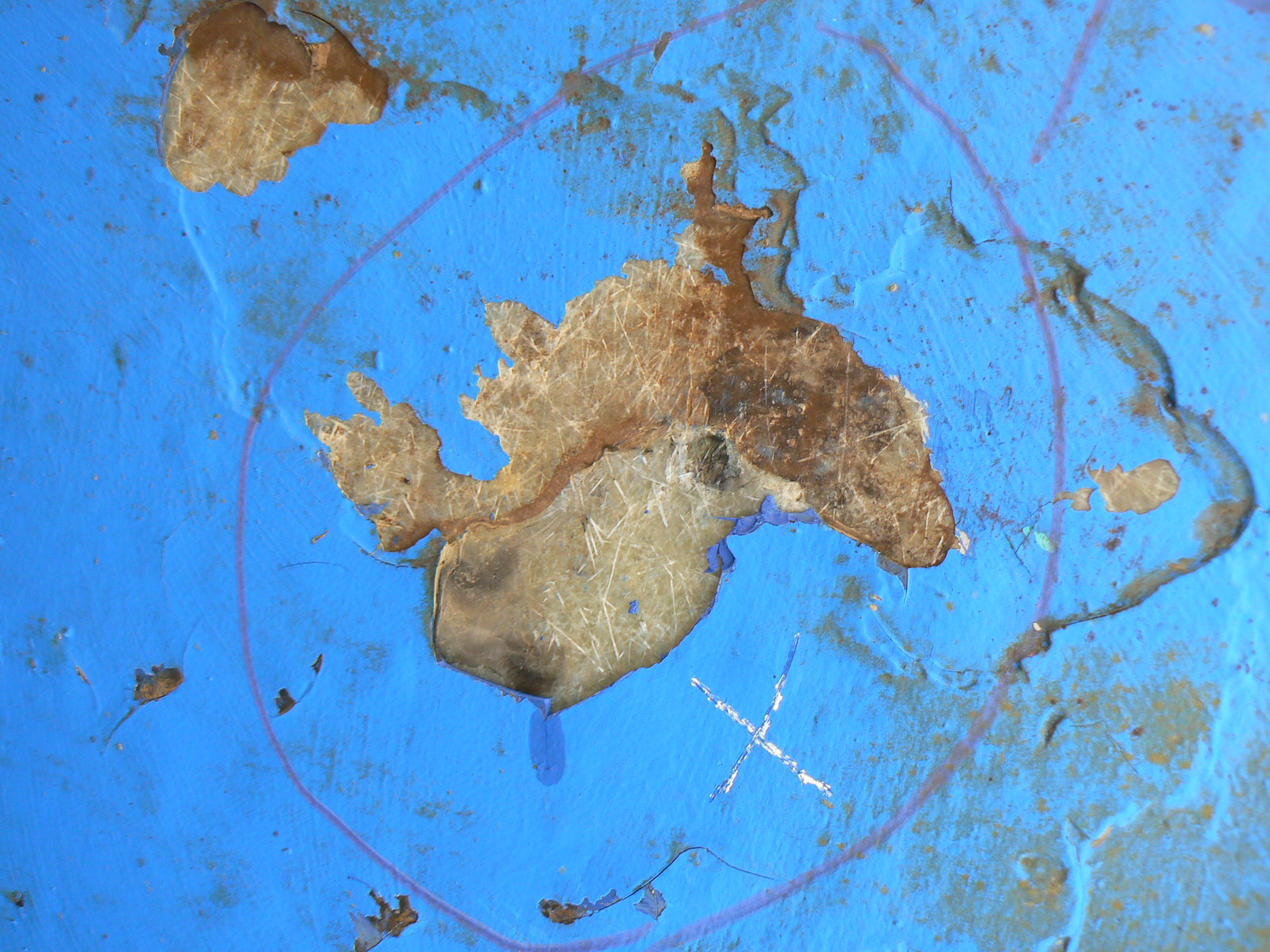
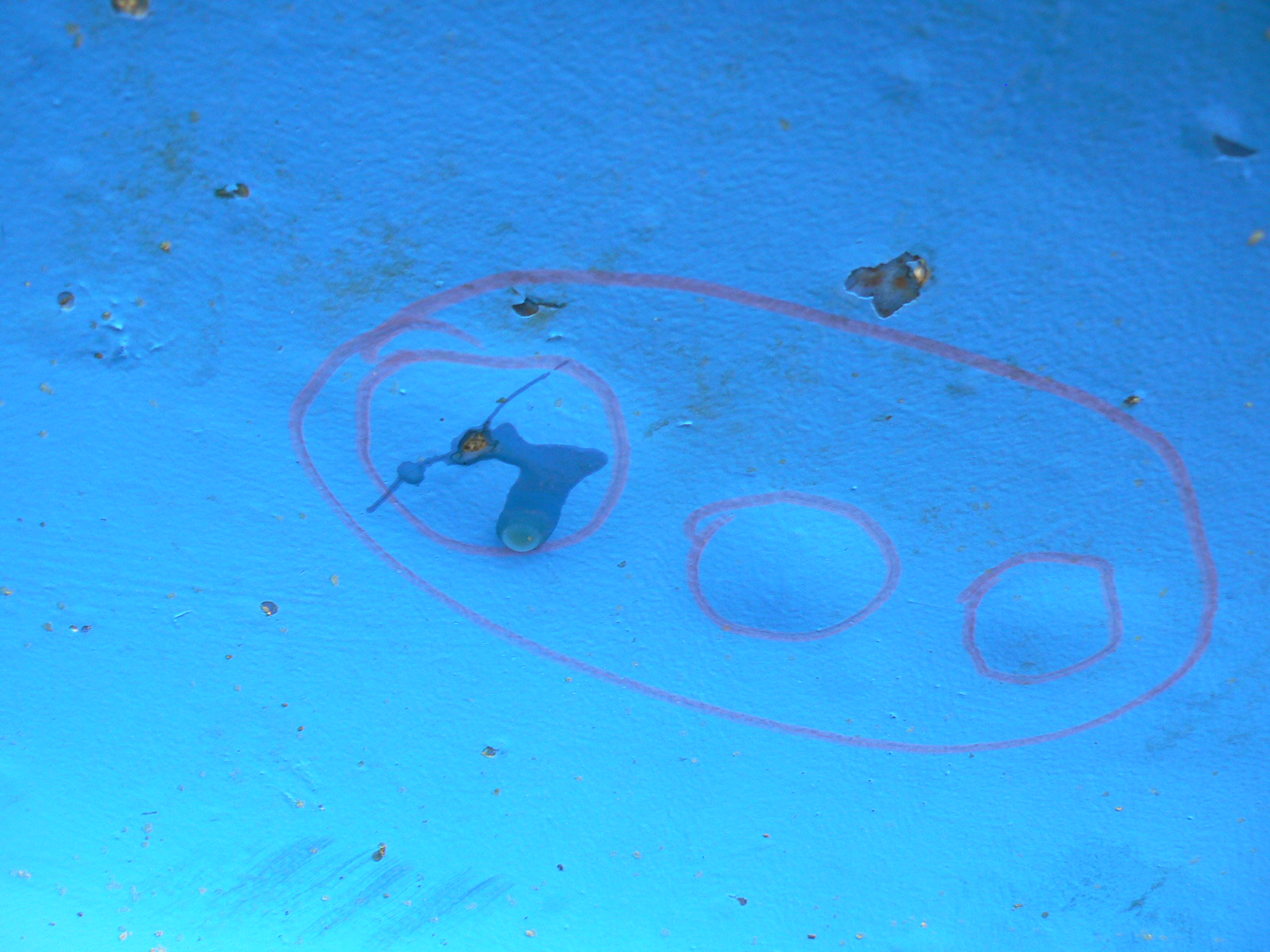
Exposed GRP substrate minus the gel coat Burst osmotic blister with ‘blister juice’
For more information contact European Marine Services Ltd. Marine Surveyors & Consultants
EMS also undertake Boat Safety Inspections & Engine Inspections
www.europeanmarinesurveys.com
Tel: 01603 327 123
Princess V65, Broom 37, Hagg 44, Ocean 30 etc – Boat Valuations
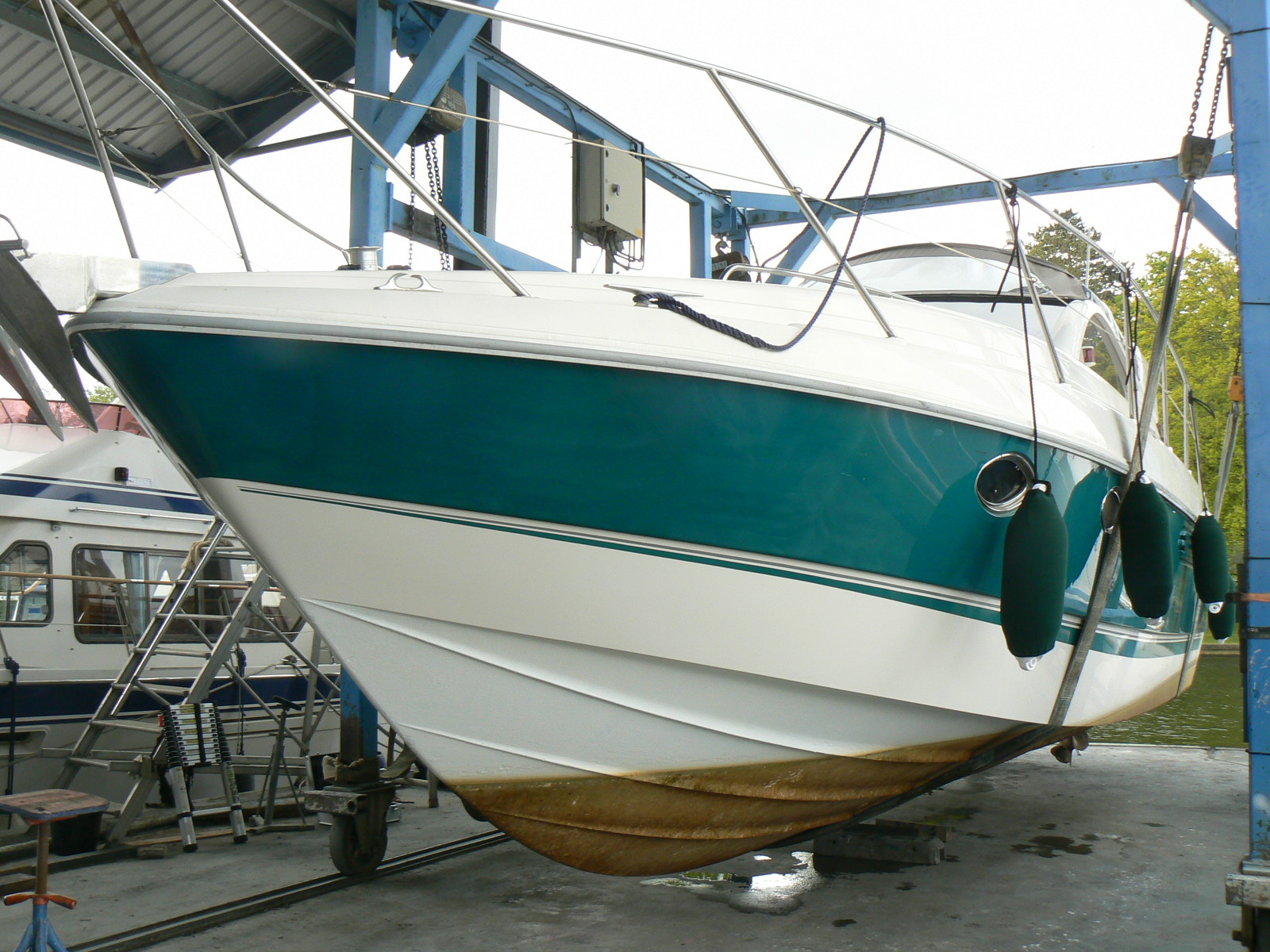
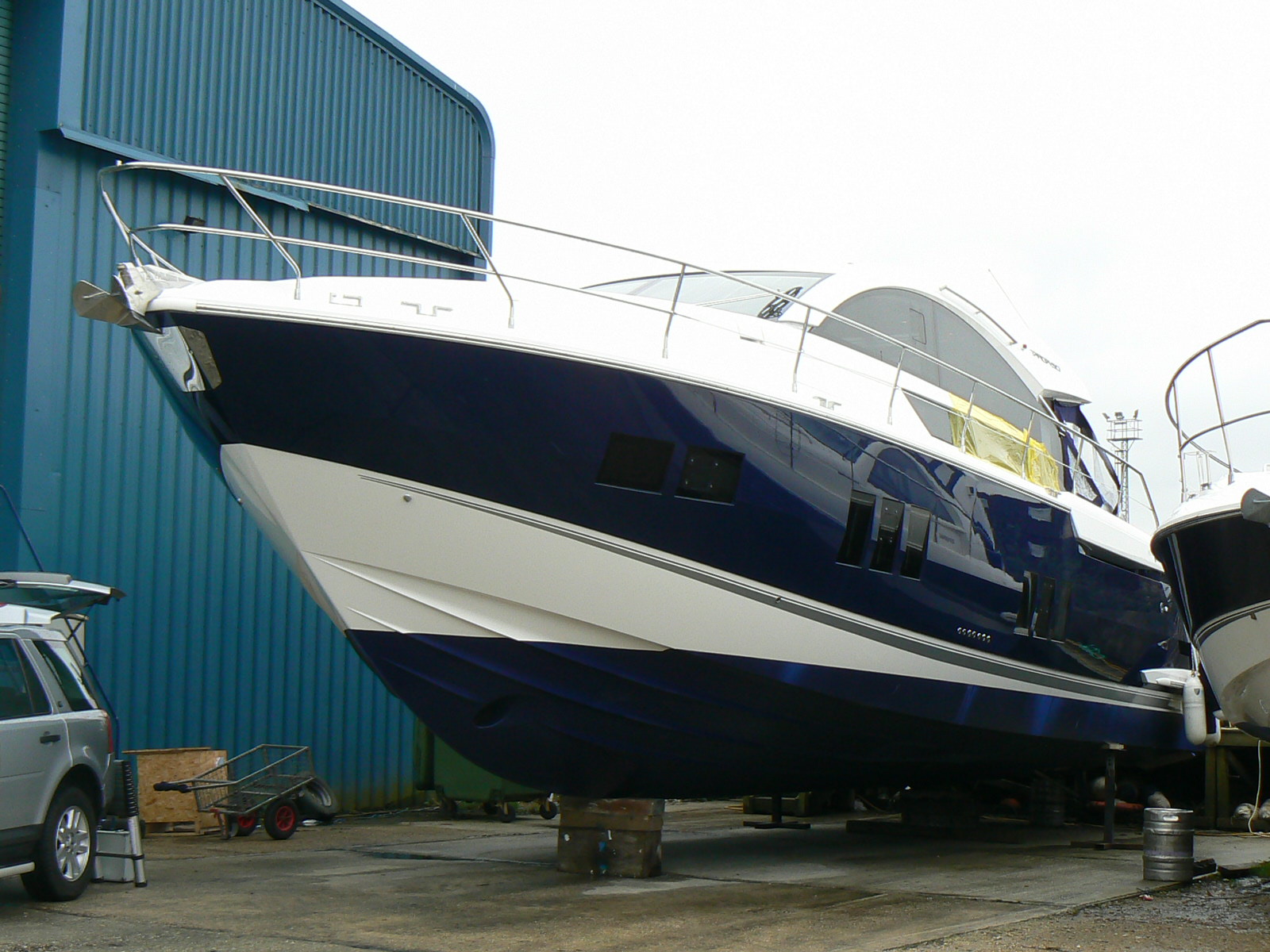
European Marine Surveys regularly undertake marine valuations for many different purposes ranging from the usual insurance valuations for boats up to 100′ to commercial valuations for such as ferries and work boats / fishing boats, for bank purposes and finance and marine valuations for the courts to CPR 35 covering disputes, probate and for matrimonial purposes ie divorce
We regularly produce valuation reports for: Lombard Marine Finance, Close Brothers, Barclays Bank, Navigators & General, Haven Knox Johnson and Saga amongst others. Plus a market valuation is included as standard in all our Pre Purchase Surveys
Where boat valuations are required for dispute, probate or matrimonial purposes we undertake and being compliant, present all our reports in accordance with CPR 35 (Civil Procedure Rules)
Currently we carried out in excess of 400 marine valuations of all types – a small cross section include such as:
Ocean 30 Hagg 44 Gemini GF12 Catamaran
Dutch steel live-aboard barges 18m Tourist Ferry Westwood 38
Hunter Legend 380 Princess V65 Eastwood 24
Broom 430 Bayliner 245 Aquafibre 42
Sheerline 740 Chris Craft Fairline Targa 50
and many many more besides ………….
For more information contact European Marine Services Ltd (inc European Marine Surveys) 01603 327 123 www.europeanmarinesurveys.com
Marine Surveying EndorsementsJune 23, 2014
Visual Inspection & Verbal report
Hi Louis,
Thanks very much for your help today, you were extremely thorough and I shall recommend you when either my family or I make another purchase some time in the future!
We bought the boat.
Best regards,
T (22/06/14)
Osmosis | What is GRP Osmosis & Wicking in a Boat ?
OSMOSIS & WICKING
Picture 1 Sample – Small osmosis blistering showing a high moisture content reading
Very simply, the problem is caused by water penetrating the gelcoat and entering the laminated structure. This water takes in solution free chemicals salts and becomes denser than salt water on the outside of the hull. This creates a differential pressure and since water will not compress blisters form on the outer side of the gelcoat
Unfortunately the development of blisters is not predictable, some vessels may indicate high moisture content, suggesting the presence of blister fluid, but will not develop blisters for many seasons if at all, others may have similar readings with blisters present. It is generally accepted that osmotic blisters will not be found with ‘low’ meter readings – though this is not always true. Not all blisters are caused by osmosis, some will be found to be dry blisters, these may often appear in the gel coat and usually caused by aeration when the original batch of gel coat was mixed.
These swell with water and raise localised rashes on the gel coat which disappear after a short time ashore and usually of no consequence.
Blisters caused by osmosis particularly at the outset may not be easy to find, as they may not be very numerous and will be quite small, having the appearance of small pimples, on average they may reach fingernail size (approximately 10 mm diameter), in extreme cases these may reach hand palm sized or larger when many blisters merge and combine making very large individual blisters, although this is a rare occurrence on modern craft, and probably would have been attended to long before it had reached this size. Serious delamination would be a result of this extreme circumstance.
However, early treatment of osmotic boats in early stages tends to be less successful than treatments of vessels with advanced blistering.
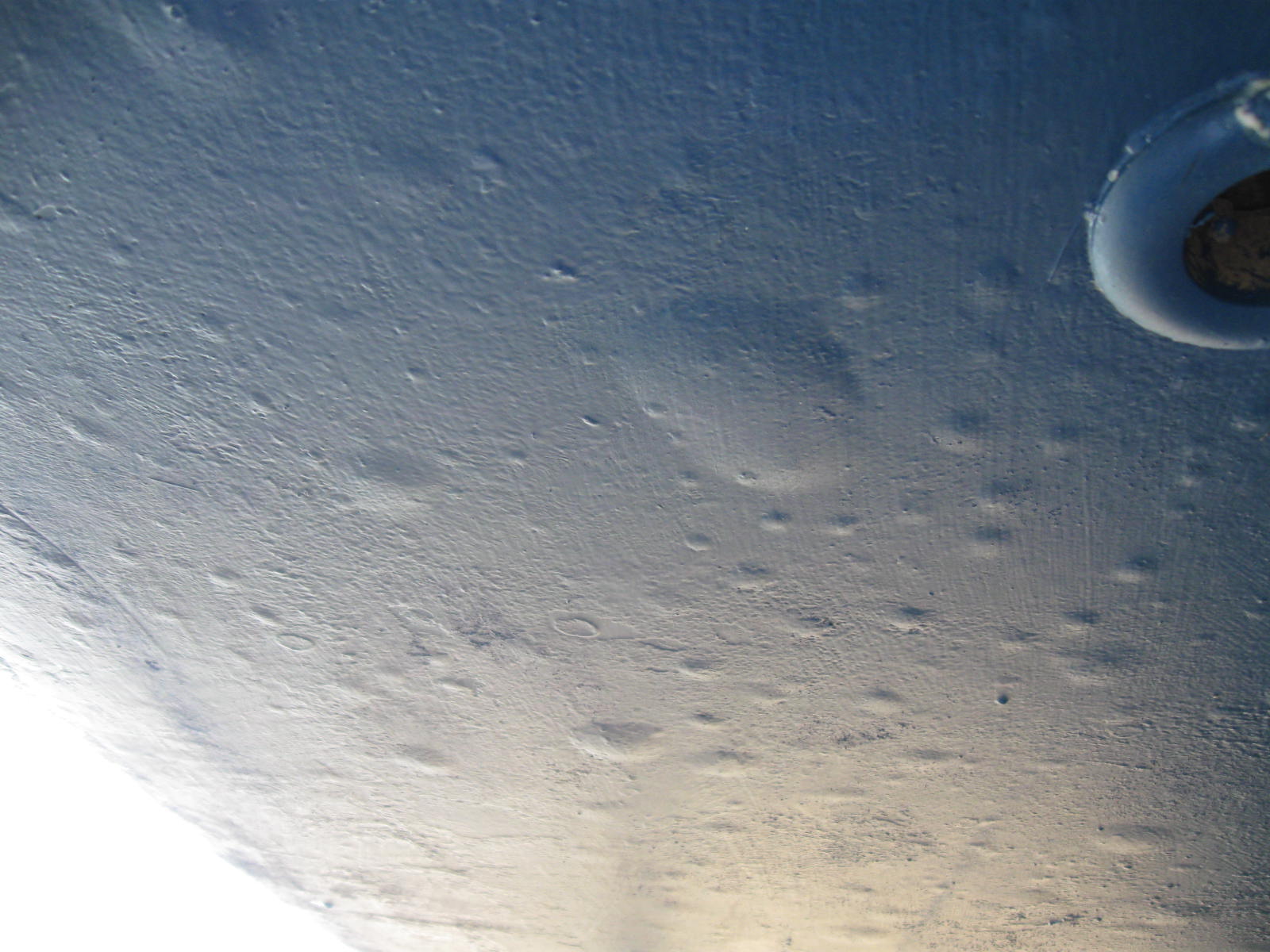
Sample – Both small and large blistering
Experience has shown that the breakdown process in GRP laminates take some time to reach its conclusion, therefore if treatment is carried out prematurely, it is much more difficult to remove solutes from the laminate, and a reoccurrence of osmosis is much more likely to occur.
At the other extreme, a visual examination revealing extensive gel coat and deeper seated blisters may be all that is necessary to produce a diagnosis of “osmosis”.
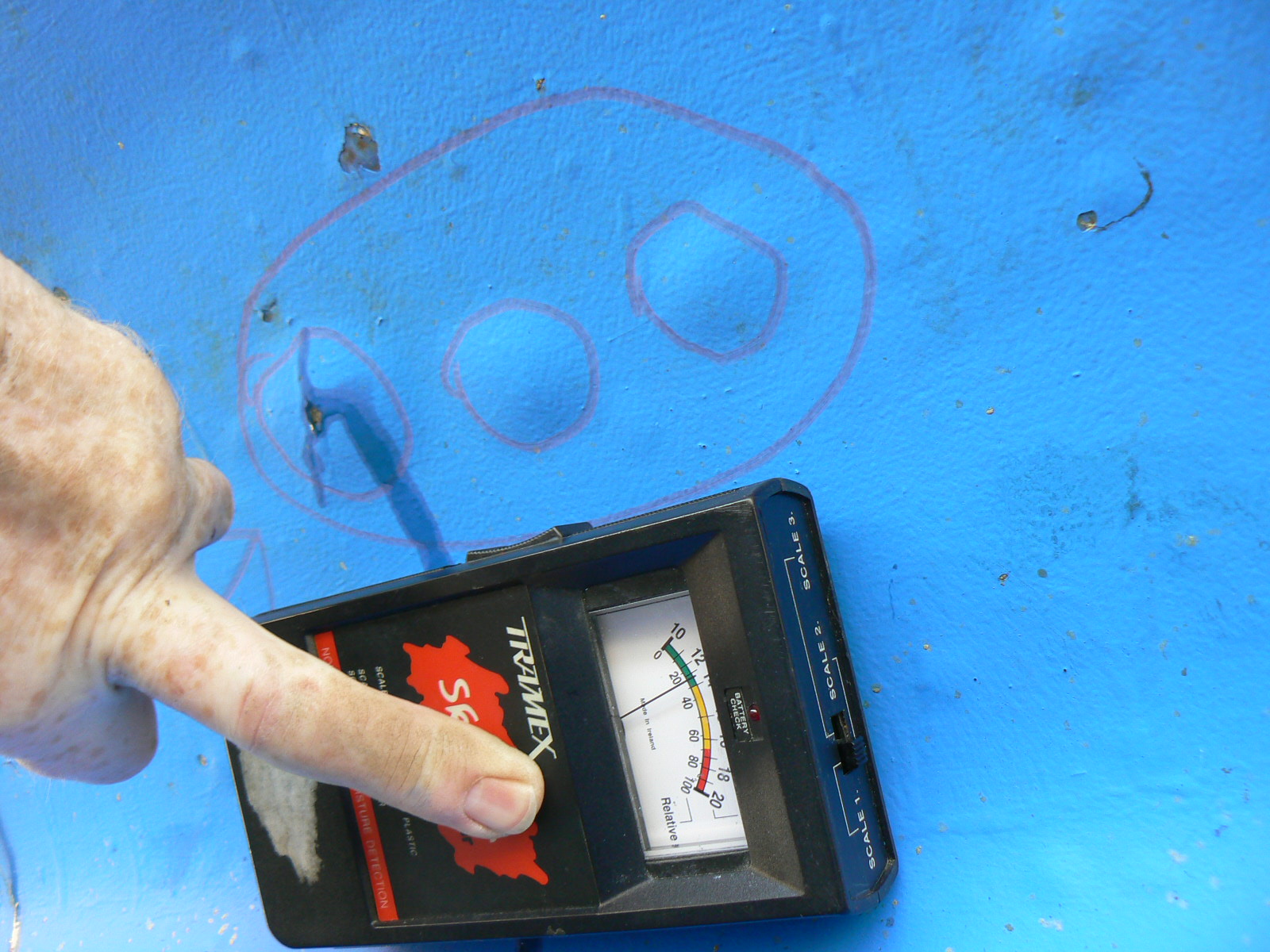
Photo 1 – The first osmotic blister was burst giving off chemical-smelling (blister juice) liquid – quite often under pressure, being acid and breaks down the polyester in a process known as hydrolysis – being normally localized. The moulding as a whole will still retain most of its strength unless these current blisters become very much larger and much more extensive. NOTE The relatively low moisture meter readings obtained
Wicking: Wicking is where the individual strands of the fibreglass mat behave like straws and draw water along their length, in doing so they swell in size and wicking will quite commonly be identified by a very slight raised pattern of the original matting visible on the gel coat.
Very often as the water dries out the swelling diminishes and the pattern disappears. When looking at a gel coat without pigment, wicking is easily identified because the area affected will have many individual strands of fibreglass clearly visible with a white outline.
This white outline is where the bond has broken between the resin and each individual strand. This ‘wicking’ is an indication that there is moisture in the resin, and is often a precursor to or accompanies blistering.
 Wicking
Treatments:
Do nothing. On an old, heavily built boat, this is a genuine option. If there are no blisters I would definitely do nothing even if a moisture meter shows very high readings. If there are blisters but they are small and not too many they are not likely to have any significant effect on the structural strength
Local treatment. Cut or grind open individual blisters, repeatedly wash out with hot water or steam, to remove the ‘blister juice’ from any blisters, dry thoroughly and fill with epoxy paste (not car body filler).
Hugo du Plessis, author of what is virtually the standard reference work on GRP yachts, regards this as the best option in almost all cases, and says total gelcoat replacement (see below) should be an absolute last recourse.
Next winter you may have a few more blisters – usually in different places. The fact that they are usually in different places is a significant one – you are not getting blisters re-occurring but new ones developing.
Go to your local ‘Osmosis treatment centre’ and pay rather a lot to have the gelcoat removed, the hull washed and dried out, and the hull recoated with epoxy. The smaller and older the boat the less cost-effective this is. Treating an old river cruiser could cost almost £4 – 5,000 on a boat perhaps only worth £15,000.
On a 50-footer worth £150,000 the cost might be £8,000 – a far lower proportion of the boat’s value. Yards used to offer a five year warranty with this work – many no longer do so, or charge extra if you want the warranty (they buy insurance against claims).
Osmosis Protection Scheme Other protective measures that can be considered for ‘hull protection’ are to sheath with a water barrier such as International Gelshield 200 or VC Tar2 which is applied over existing gelcoat – however such applications cannot stop osmosis once it has started. Such applications if applied following the manufacturer’s instructions are usually successful and can greatly extend the useful life of the hull structure.
Acknowledgement: https://www.yachtsnet.co.uk/osmosis.htm
For more information contact European Marine Services Ltd. Marine Surveyors & Consultants
EMS also undertake Boat Safety Inspections & Engine Inspections
www.europeanmarinesurveys.com
Tel: 01603 327 123
Training & Development for our marine surveyorsJune 19, 2014
Continuous and Ongoing Skills Improvement – Marine Surveyor Training
Tales from the International Boat Building College (IBTC) at Oulton Broad
1. Lofting
Lofting is a drafting technique (sometimes using mathematical tables) whereby curved lines are generated, to be used in plans for streamlined objects such as aircraft and boats. The lines may be drawn on wood and the wood then cut for advanced woodworking. The technique can be as simple as bending a flexible object, such as a long strip of thin wood or thin plastic, so that it passes over three non-linear points and scribing the resultant curved line, or plotting the line using computers or mathematical tables.
Lofting is particularly useful in boat building, when it is used to draw and cut pieces for hulls and keels, which are usually curved, often in three dimensions. It was also commonly used in aircraft design before the widespread adoption of computer-generated shaping programs.
Here I am (Louis Bodmer of European Marine Surveys) applying the art and skills of lofting a boat on real scale and fairing the waterlines in the half-breadth view. It takes a vast floor to do so!
Just a quick example of the skills and knowledge I’ve gained while training at the International Boat Building College (IBTC) on Oulton Broad. My colleague Jacob and I have been lofting an 11ft clinker sailing dinghy.
It has been very interesting seeing some obscure figures in a table of off-set gradually developing into some fair and pleasing lines and becoming a boat which eventually will float!
We are now into the next step and building the first components of the boat as the transom, keel, hog, stem and apron.
More updates to come as the work progresses !
Nordhavn 55 – Qualifying Ship for Zero-Rating VAT purposes (#727)June 16, 2014
Expert Witness Services – Available from European Marine Services Ltd
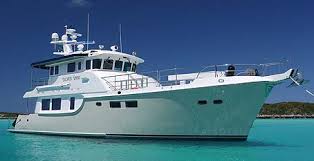 Similar Vessel
We are currently representing a private client in respect of the following question ……..
HM Revenue & Customs – Qualifying ship for zero-rating VAT purposes per Value Added Tax Act 1995, Schedule 8, Group 8, Item 1 and legal note A1 (a)
A ‘qualifying ship’ is defined as a ship which is not less than 15 gross tons and is neither designed nor adapted for use for recreation or pleasure
Questions to be addressed:
2.2.1 Is the vessel designed exclusively for pleasure or recreational purposes
2.2.2 Does the vessel exceed the 15 gross ton HMRC stipulation
2.2.3 Do I believe that the vessel has been designed to use as a home
Watch this space for further news and updates
For more information contact European Marine Services Ltd (inc European Marine Surveys) 01603 327 123 www.europeanmarinesurveys.com